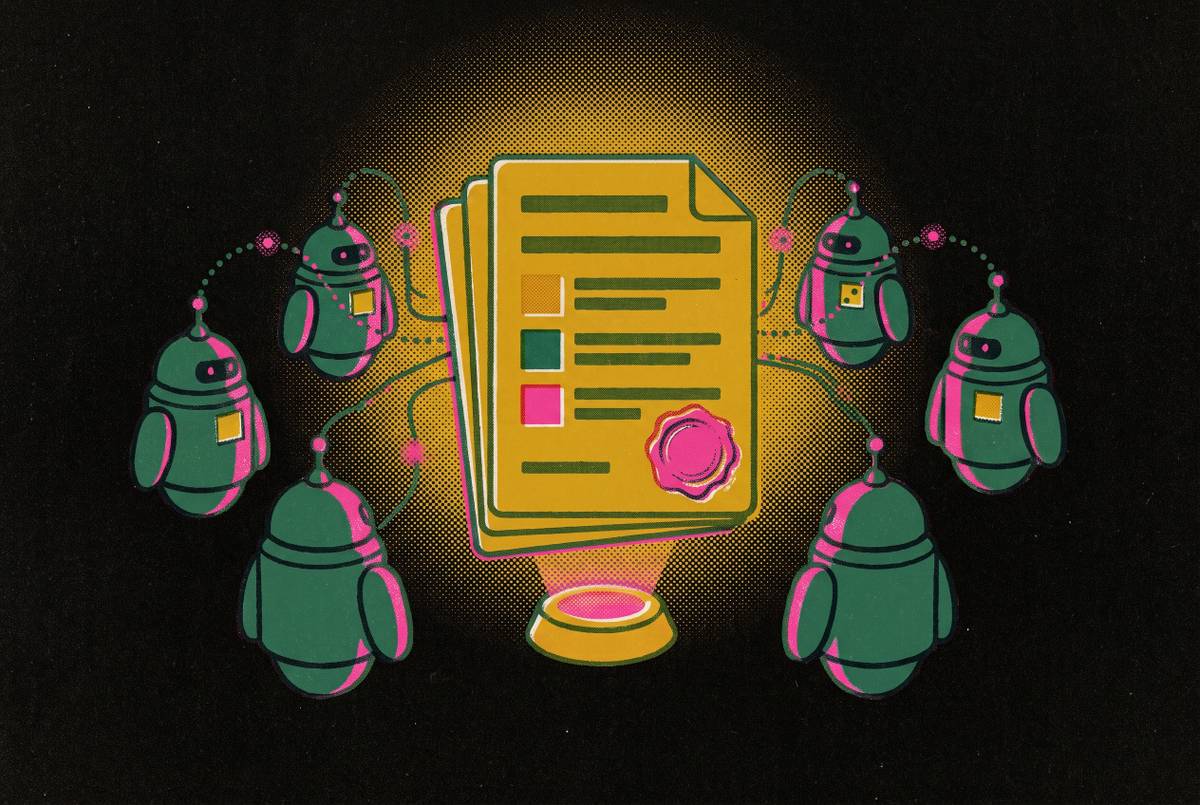
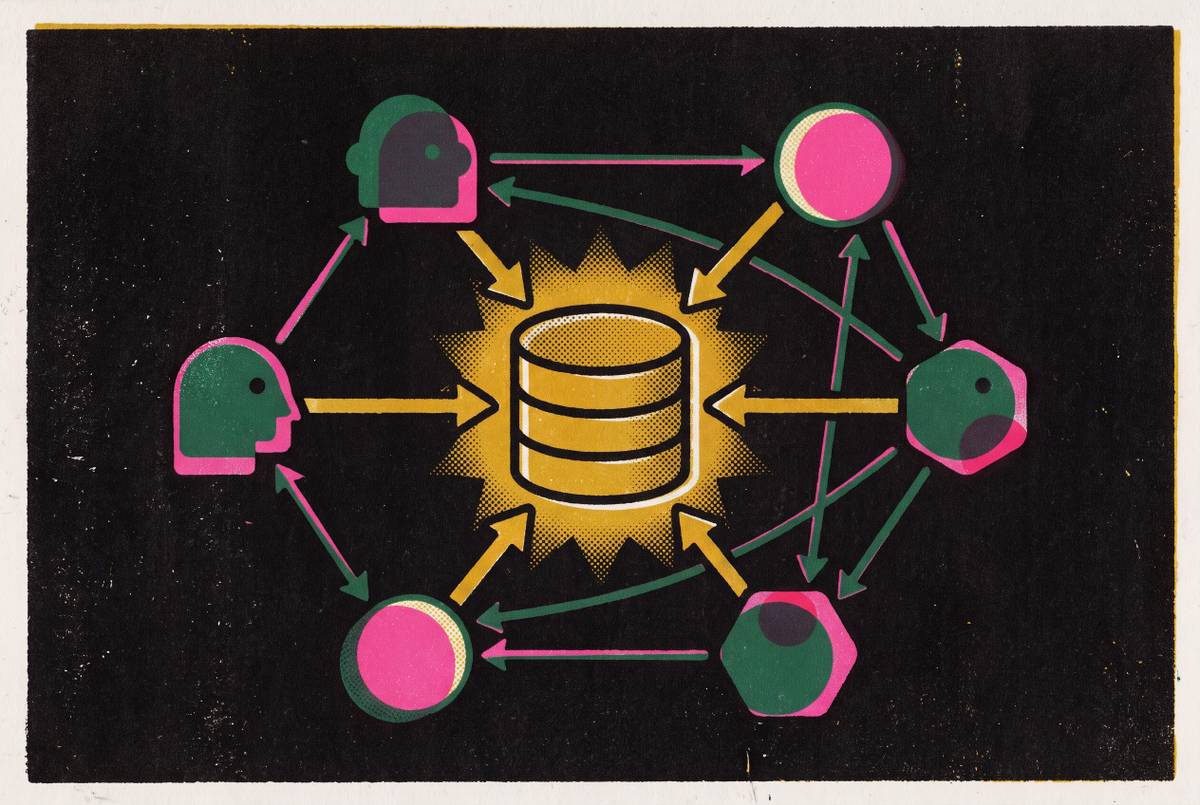
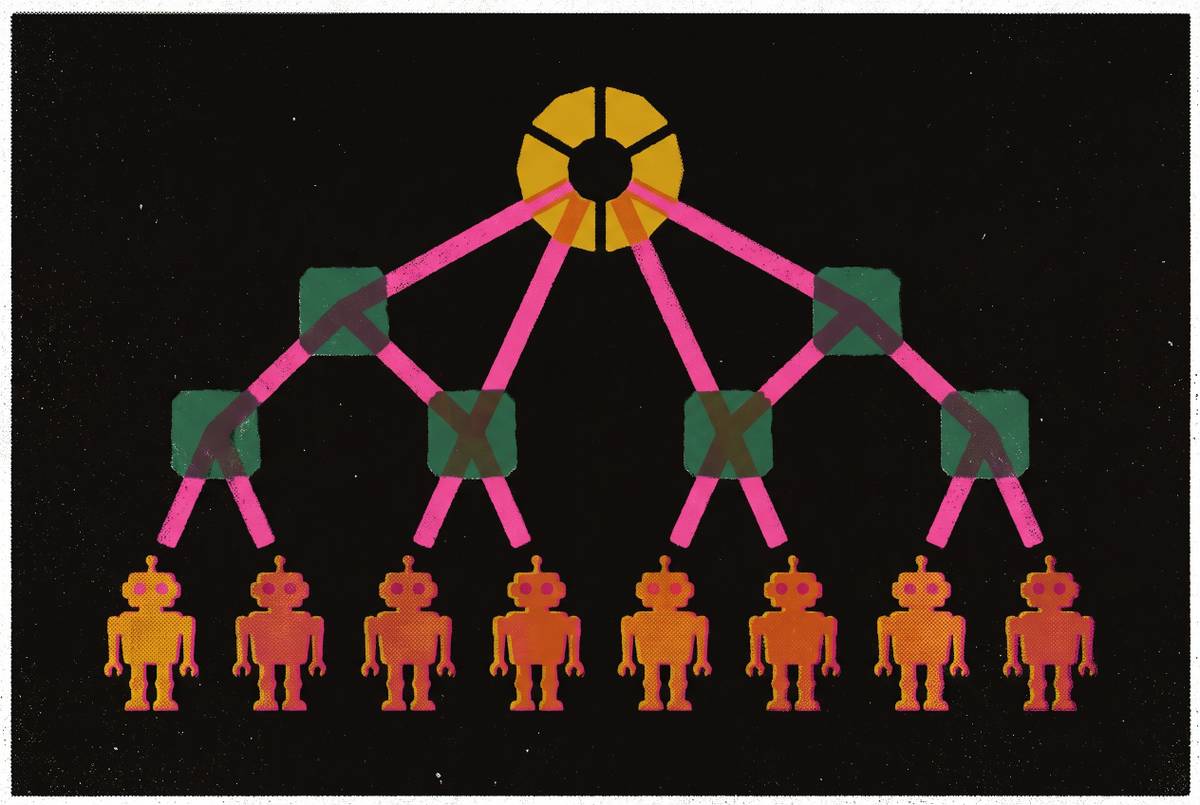
Existing Brand Asset Systems as Live Dependency Endpoints AI Agents Resolve Against at Generation Time
Brand rules work for AI agents only when queried live.
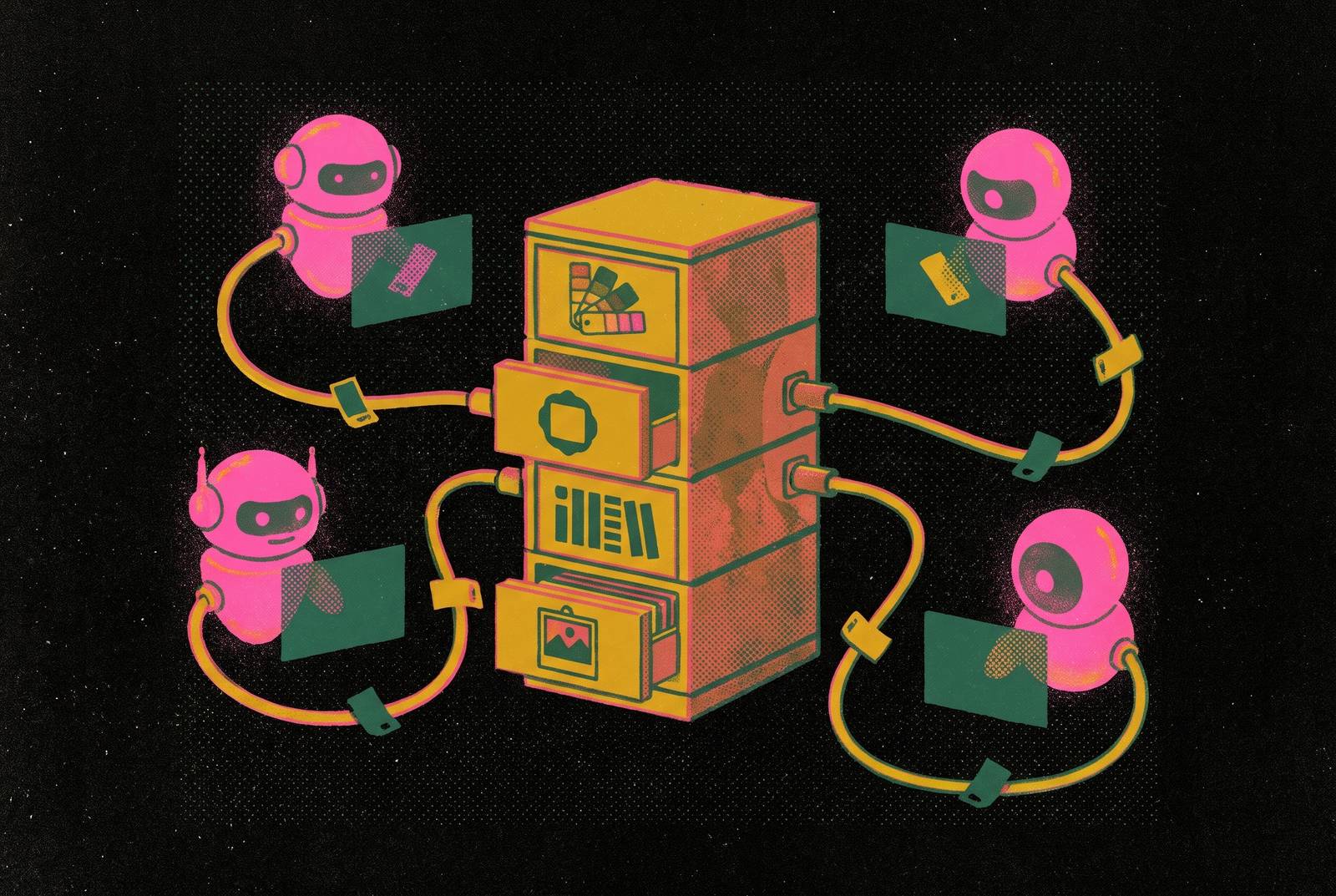
Existing brand guidelines become usable by AI agents when their rules are structured as machine-readable data, hosted at a queryable endpoint, and resolved at generation time. Model Context Protocol connects compatible agents to that endpoint, while versioning and output validation make the connection governable. The architectural shift is from a brand library consulted at setup to a live dependency used whenever an agent produces work.
Why brand assets are the wrong mental model for AI agent workflows
A marketer gives an AI tool a brand guide at the start of a session, then walks away. By the next session, the next agent, or the next teammate’s prompt, that context is gone unless someone supplies it again. The tool still works. What has disappeared is its connection to the rules that distinguish acceptable brand output from plausible generic output.
The familiar PDF style guide, Confluence page, or shared folder assumes a human reader who can internalize guidance and apply it later. An agent workflow needs those rules where the work happens, beyond the place where someone has stored them. Without that connection, the model generates from its training weights and whatever context the current request provides. Faster production then widens the governance gap because the ability to create assets grows without a corresponding way to keep their brand context consistent.
What runtime dependency resolution means and why it maps onto brand systems
A software dependency is something a program needs in order to work. Rather than copying that dependency into every project and maintaining each copy separately, software can resolve it from a managed source. Brand systems face the same choice when they supply context to agents.
Consider a package.json that pins a dependency to an exact version, compared with one whose declaration allows a version to be resolved at install. The first fixes the selected version. The second lets the installation process select a version under the declared constraint. Installation and runtime are different moments, but the comparison makes the architectural choice concrete. For a brand workflow, the relevant resolution point is generation, when the agent needs the approved rules for the work it is about to produce.
A brand guide copied into a system prompt is like the fixed snapshot. A live query instead retrieves the approved context available at that moment, provided the endpoint is maintained as the authoritative source. That query can also be task-specific. A campaign image needs different rules from a press release, even when both are for the same brand. The runtime model therefore supports scoped responses, current rules, and an auditable account of what context was served to which agent and when.
How MCP makes brand endpoints queryable at generation time
Anthropic open-sourced Model Context Protocol in November 2024, giving agents that support it a standard way to connect to external tools and context. MCP makes the dependency model buildable. An agent can query a connected brand system for voice rules, visual identity tokens, or positioning instead of having that context pasted into a session. By 2026, the ecosystem includes Claude, ChatGPT, Gemini, Microsoft Copilot, Cursor, Visual Studio Code, and a broad set of agent frameworks.
Stockpress launched an MCP server in October 2026 to give tools such as ChatGPT and Claude live access to an organization’s brand library. Dash Social launched its integration in August 2026 so AI workflows could use its proprietary performance data, audience context, and competitive intelligence. One connects agents to assets, while the other supplies intelligence that informs marketing decisions.
Figma shipped its official MCP server in 2025, moving from beta in June to general availability in October. Its 2026 expansion added write-back-to-canvas capabilities, connecting design-context retrieval, variables, components, and canvas changes to the design system. Canva shipped an MCP-compatible AI Connector in 2026 for creating and editing designs, managing brand assets, searching existing designs and brand templates on paid plans, and exporting in multiple formats.
Amazon Ads launched its MCP server in open beta on February 2, 2026, bringing the protocol into the systems that run advertising. Separately, SitecoreAI introduced editable brand context files in August 2026, generated from a supplied brand website URL or an existing site. That feature addresses context preparation. Across the MCP integrations, the shared pattern is that knowledge previously separated from the generation tool becomes queryable when the agent acts.
How do existing brand guidelines become machine-queryable?
A connected document is not yet a machine-queryable brand system. The endpoint needs structured data, including design tokens, component schemas, semantic naming conventions, and explicit rules. These give agents values and constraints they can apply directly. The structure can be understood as a stack.
At the base, a token supplies a defined value. In the semantic layer, color.action.primary explains that value’s role more precisely than blue, preserving intent even when the approved color changes. Component schemas describe the structures available to the agent, while explicit rule sets constrain their use. The delivery layer then answers the task-specific query. Each layer removes a different source of ambiguity between the brand’s definition and the agent’s output.
A Figma file and a Storybook gallery alone do not provide the structured interface an AI coding agent needs. JSON tokens, component schemas, and a parseable DESIGN.md make the system available in forms an agent can consume. Visual generation presents a further constraint. Hex codes and clear-space rules passed as prose into a diffusion model do not become exact rendering instructions, because the model approximates color through language. Structured tokens and reference images address that mismatch more directly, while Aprimo’s 2026 DAM analysis describes how structured, labeled libraries also support learning brand vocabulary, product names, and campaign terminology.
Why static brand documents fail at the moment of generation, not at setup
A static guide can be entirely correct when written and still fail the workflow. Its accuracy is not the missing connection. The workflow fails when generation starts before the agent has the rules it needs, so the asset already has inconsistencies when review begins. Even when setup goes well, it says little about whether the next production request will use the same context.
The resulting voice drift accumulates across responses. Different agents, sessions, and teammates use different context to generate work, while the voice in the guide stays the same. Human review catches some of that divergence, but it does not reconnect the production pipeline to the guide. As more work is produced, reviewers must keep using their judgment to make up for the missing infrastructure.
The claim that better prompts solve this problem confuses request quality with context delivery. Prompts remain useful for describing the task. However, a prompt is scoped to its agent and session, so the same workflow across three agents and two weeks can produce different interpretations of the same wording. A live endpoint can supply the same approved context when the brand, task scope, and version are the same, without promising identical model output. The distinction is between controlling what the agent receives and assuming that a carefully written prompt will preserve that context across the whole operation.
How a live brand endpoint changes the multi-brand and agency workflow
An agency cannot rely on a long-running conversation to keep track of which client the work is for. Each client’s context must be independently callable by the same agent infrastructure. Isolation is an architectural requirement. Otherwise, a workflow that works for one brand has nothing built in to ensure that another client’s palette, fonts, or voice rules stay separate.
In the runtime pattern, an agent calls a brand_get tool before generation and requests the context for the specific client. The response gives the agent that client’s font, palette, and voice rules to use in the generation request. The endpoint maintains the brand-specific context. The workflow therefore does not depend on the agent retaining one client’s identity between tasks or correctly discarding it before serving another.
An agent may pull audience data from one MCP server, consult creative assets through another, and build a campaign in a third, with each server resolving its own context. That makes client scoping necessary across the workflow. MCP provides the connection pattern, but connection alone does not establish isolation. General-purpose agent builders below the enterprise tier can pool resources into a shared workspace and leave per-client separation to the agency, so the architecture still has to address that boundary explicitly.
Reviewing AI-generated output against the brand at the endpoint, not after the fact
Giving an agent the right context before generation does not prove that the finished asset follows it. A live brand endpoint can also provide the authoritative reference for output review, turning a comparison against remembered guidance into a structured check against approved rules. Review then belongs inside the governed workflow rather than becoming an attempt to reconstruct the intended brand after production.
Visual output makes the distinction especially clear. Reading a prompt with the correct hex code again cannot prove that the generated image uses that color. Validation requires a structured comparison between the output and the token values supplied by the brand endpoint. The same check is needed whenever an agent can receive a rule correctly but fail to follow it.
When generation and review resolve against the same versioned context, the workflow can retain an auditable record of what was served, what was produced, and what passed or failed. That record gives the brand team evidence for locating a discrepancy rather than treating every defect as an unexplained failure of the model. It also distinguishes context delivery from output compliance. Review at the endpoint follows the same architectural pattern as generation at the endpoint because both operations use live, authoritative brand context.
What it means to treat brand context as versioned, living infrastructure
A live endpoint requires the brand itself to be maintained as a versioned system. A palette change, voice update, or new legal compliance rule becomes a committed change that connected agents receive at their next resolution. Downstream prompts can get the new approved context without anyone replacing them by hand.
Versioning also makes that propagation intelligible across multiple agents. When Claude, a Cursor agent, a web generation workflow, and a campaign image tool depend on the same source, an unversioned edit can silently disrupt consistency across the stack. The change needs an identifiable state. Otherwise, a team cannot reliably connect the context used for generation with the context used for review, especially when the brand changes between those events.
Aprimo’s analysis describes how DAM platforms are moving from systems of record to systems of action. The endpoint model extends that direction by putting brand context inside the production and review workflow. MCP and a REST API offer different connection paths. Compatible agents can use MCP, while teams can build the same context into their own products through an API, with both paths drawing on one versioned source.
For a team starting with static guidelines, the practical sequence is to structure the identity as machine-readable data, host it at a queryable endpoint, version it, and connect the agents that produce work. A better prompt template is not the first dependency to fix. The operational commitment is to maintain the approved source and make its use part of generation and validation.