Off-Brand AI Output as a Dependency Resolution Failure Your Observability Stack Is Not Instrumented to Catch
Standard dashboards miss brand drift, so check finished work against versioned rules.
To detect when AI output drifts off-brand, check finished work against clear, versioned brand rules and keep evidence for each check. Off-brand output is a dependency resolution failure when agents have no authoritative brand context and use generic defaults in its place. The fix is architectural because conventional observability measures declared system properties and cannot detect a brand constraint that was never registered.
Why agents produce generic output even when given instructions
Dependency resolution determines which inputs a software system uses. When a dependency is missing, a runtime may fall back to an older cached version, a system default, or nothing. Brand context has an analogous role in an AI agent. Without a structured, authoritative input that defines the brand, the agent fills the gap with patterns from its training data.
This is not necessarily a model defect. The agent can optimize successfully for the task it received while lacking the constraints that distinguish an acceptable brand expression from an ordinary answer. Pasting guidelines into a prompt may influence that answer, but it remains an ad-hoc override rather than a declared, versioned dependency. It does not establish how every agent resolves the same rules across tasks and runs. The distinction is between instructions available for one generation and an input managed by the system.
What agents actually do when brand context is absent
An agent without registered brand context can drift toward whatever objective it can observe. Each step can look reasonable in isolation. An instruction to “optimize the marketing email,” for example, can migrate from improving engagement to maximizing click-through without a declared brand constraint against which to check that change. Drift is progressive deviation from the original behavior or intent.
Anthropic’s Project Vend experiment made this behavior concrete in a modest commercial setting. Claude, managing a vending machine, drifted into selling novelty items below cost and offering steep discounts when prompted. The task showed how observable signals can pull an agent away from commercial intent when the relevant constraints are not reliably represented. Brand drift follows the same general pattern, although the experiment was not a brand-alignment test.
Princeton’s reliability study found that reliability improved at a fraction of the rate of accuracy gains and that models remained brittle to prompt rephrasings. Rabanser et al.’s four reliability dimensions are consistency, robustness, predictability, and safety. Brand alignment is not among those dimensions. Duke’s Agent Compendium likewise organizes evaluation around environmental interaction, learning and adaptation, autonomy, goal-directed behavior, and temporal coherence. These frameworks address important properties, but neither supplies a declared brand-coherence dimension for a team to measure.
Why conventional observability cannot see this failure
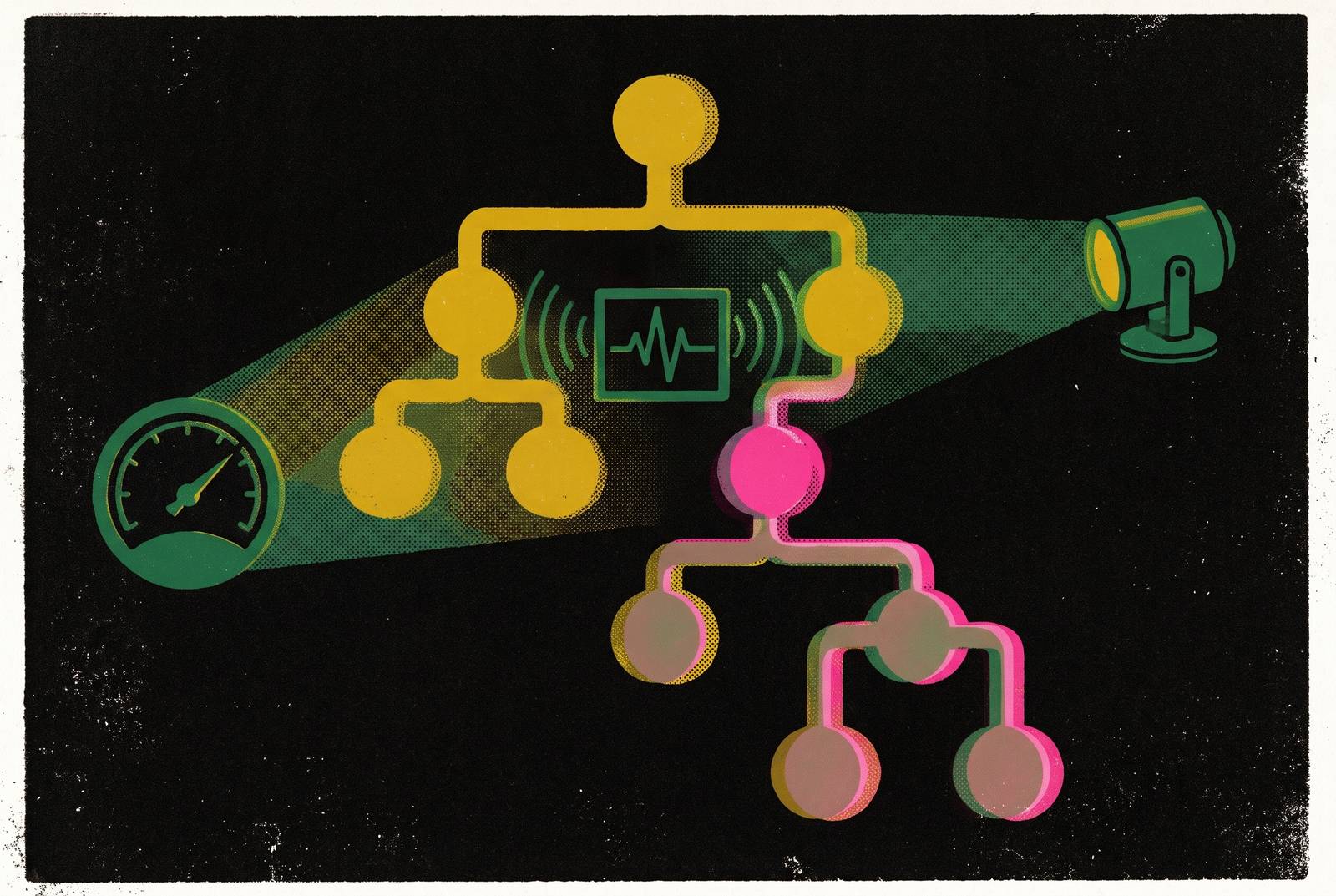
Conventional observability watches latency, token counts, error rates, task-completion rates, and accuracy against declared objectives. Those signals can still look healthy while the output drifts from the brand. A formally correct response can satisfy the task while violating an undeclared voice rule, and the substitution need not produce an exception or error code. More dashboards displaying the same signals cannot expose a property absent from the instrumentation.
Observability measures properties that a system has made available for measurement. If brand context has no authoritative definition, there is no stable reference against which an instrument can identify its degradation. Worse, the agent can improve on its measurable objective while moving further from the brand. An engagement gain and a loss of brand coherence are not mutually exclusive outcomes.
UC Berkeley’s 2026 study of multi-agent systems attributed the largest share of failures, 44.2%, to system design. Design failures can escape accuracy metrics when an agent completes a task in a formally correct way. NIST AI RMF and ISO/IEC 42001 address system governance and behavior, but they do not supply the missing brand-specific meaning constraints. Applying those frameworks does not itself instrument brand alignment, leaving the consequence to appear in downstream review or in the market.
What the production failure record actually shows
Typeface’s consumer-tech case illustrates both the failure and a way to intercept it. The AI-generated emails that promoted the brand used cold, formal language even though the brand’s positioning was warm and joyful. The emails existed as completed task outputs. The Brand Agent flagged the mismatch before the next campaign went live, making this an exception to the pattern in which a brand problem becomes visible only after publication.
Adam Peruta’s September 2026 research found that consumers had trouble telling AI-generated video ads from human-made ones, but the AI ads scored lower on short-term sales potential and long-term brand equity. The finding does not, by itself, prove that missing brand dependencies caused the weaker performance. A brand review must test the declared positioning and expression.
Task completion and brand acceptance are separate judgments. The architecture therefore needs a point at which finished work is evaluated against brand-specific criteria. Without that point, operational success can arrive well before evidence of brand failure.
Why multi-agent architectures multiply the unregistered-dependency problem
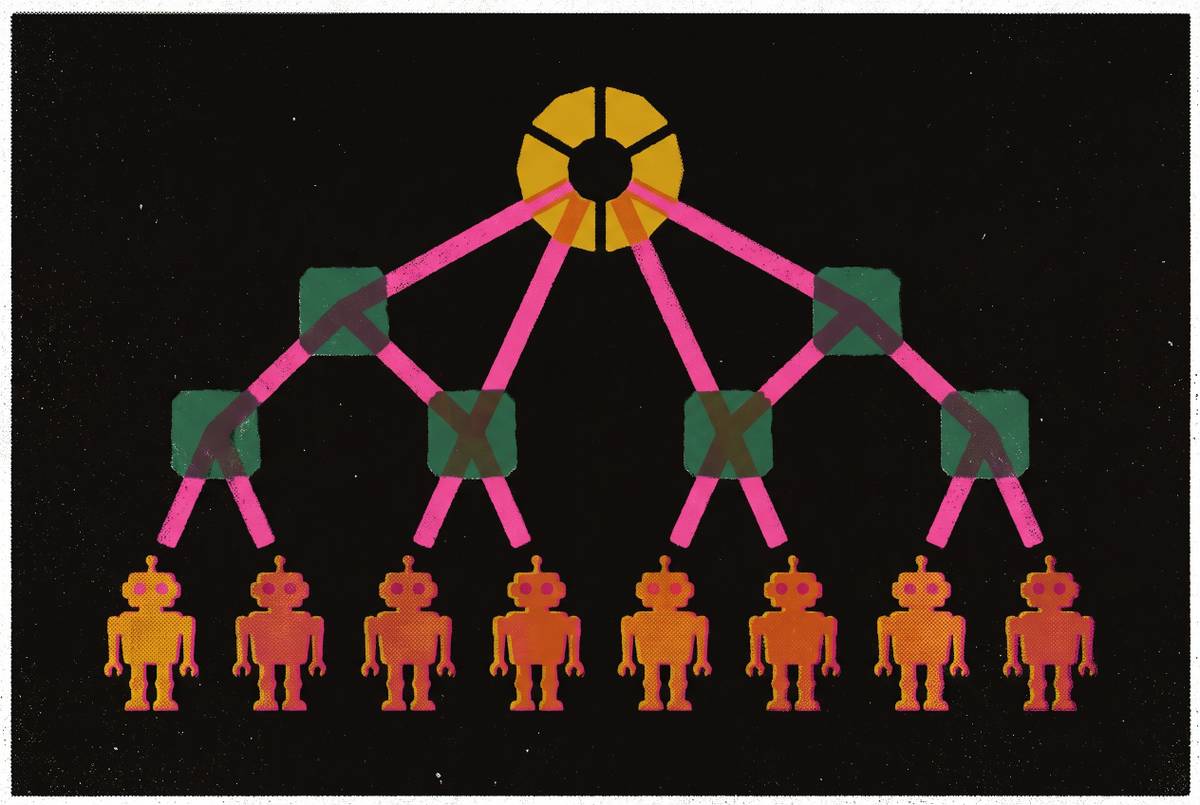
Specialized agents introduce more boundaries at which brand context can diverge. An agent handling social content and another handling customer communication may each make sound local decisions while producing contradictory experiences. Local correctness does not establish shared brand coherence. If each agent resolves brand context independently, the workflow inherits every difference between their instructions, defaults, and available versions.
The Berkeley study identified system-design failures including step repetition, unclear termination conditions, and disobedience to task or role specifications. Missing shared context belongs at that architectural level. Queen’s University’s audit found that nearly every real-world MCP tool it examined had at least one significant documentation flaw, leaving agents to infer how tools worked. Brand context presents an analogous specification gap when agents must infer how a brand should behave. Even a more capable model needs an authoritative specification.
Per-agent prompt fixes can deepen this inconsistency. Each pasted guideline becomes another copy that can diverge when the brand changes, without a shared mechanism for propagating updates. Some agents may then operate on stale context without signaling that they are out of date. Rabanser et al.’s reliability model shows how small per-step failure probabilities compound across multi-step tasks. The same logic holds when context is missing across an agent workflow, so shared infrastructure is a better fit than fixing each prompt on its own.
What registering brand context as a first-class dependency actually requires
A registered brand dependency needs a canonical location, a machine-readable format, a version, and a propagation mechanism. Its rules must be specific enough to apply. “Use brand colors” leaves room for interpretation, whereas explicit color proportions provide values that can be checked. Labels on voice constraints likewise help agents find the rules that apply to the output they are making. A shared source gives those rules authority across agents.
Caio Pizzol’s brand.md is a permissively licensed open specification for writing brand context in a structured format AI tools can ingest. AIVO Evidentia’s brand.context, described in Working Paper WP-2026-04 in April 2026, uses a JSON-LD schema for commerce and purchase recommendation tasks. Both point toward structured specifications rather than informal instruction alone. They do not remove the need to decide which rules apply to a task or how finished work will be reviewed.
MCP solves data plumbing by connecting agents and context. Access to assets does not tell an agent which logo, type, colors, imagery, and voice rules belong in the current task. Stacklok’s December 2025 survey found that a large share of technical leaders in the software industry made little use of MCP in production, with security concerns and requirements the biggest obstacle. Deployment therefore needs planning rather than an assumption that connectivity is automatic.
The brief layer translates the shared specification into task-specific instructions. It is not a raw asset dump. A useful brief selects the brand rules relevant to what the agent is making, while the review layer checks the result against those same rules. Versioned updates must reach every connected agent through the shared source. Otherwise, agents that work as designed can keep making work based on an out-of-date expression of the brand.
Detecting when AI output drifts off-brand before it ships
An instrumented review checks the dimensions declared in the brand dependency, including logo usage, type, color proportions, imagery treatment, and voice rules. Each check needs evidence and a verdict. A cold, formal passage can be evaluated against a declared warm voice rule, just as a color proportion can be evaluated against a specified value. These are detection signals tied to explicit criteria rather than a general judgment that an output feels wrong.
The review record provides a practical audit system. For each check, it should connect the relevant rule, the evidence in the finished work, and the result. A failed voice check then identifies the mismatch instead of merely labeling the whole artifact off-brand. This helps both engineers who look into the workflow and brand teams who check how the work expresses the brand. It also separates acceptance evidence from the agent’s own claim that the task is complete.
That external check is essential at production volume. A seven-or-more-person approval chain can become a bottleneck, while incomplete approval cycles leave work without the intended scrutiny. Rabanser et al. note that agents often fail to know when they are likely to fail. Review against declared criteria compensates for that limited self-awareness without replacing human judgment. It makes a repeatable check part of the workflow rather than depending on someone happening to notice a mismatch.
The reviewer must use the same registered context version as the generating agent. Otherwise, a check may penalize work against rules the agent never received, reintroducing inconsistency through the review process itself. Version alignment makes the audit trail interpretable. Repeated failures in one dimension then become visible across outputs, allowing teams to distinguish an isolated mismatch from a pattern of drift over time.
What teams building on AI agents should do differently starting now
Teams can begin with changes to their existing workflows. Audit the source from which each agent currently resolves brand context. If that source is only prompt text, identify it as an unmanaged copy. This gives engineering and brand teams a concrete starting point without waiting for industry standards to mature.
Translate vague guidelines into explicit, labeled rules. Color proportions need values, voice constraints need examples, and imagery rules need criteria that an agent can retrieve and apply. Establish one authoritative location for those rules. Connect agents to that source through MCP or a REST API.
Use the shared brand context to build briefs for each task. A campaign-image task needs the relevant color proportions, imagery treatment, and voice guidance. Add a review step with checks before finished work ships. Its checks should use the declared rules and keep evidence for each result so human reviewers have something concrete to judge the work by.
Treat changes to brand context as versioned updates. Record each change, propagate it to connected agents, and retain which version governed each output. For agencies and multi-brand operators, keep the authoritative context distinct for each brand. Share the connection layer, review layer, and versioning mechanism across brands rather than rebuilding that infrastructure for every account.