Brand Guideline Propagation as a Write-Once Read-Many Contract Agents Observe at Inference Time
Agents need explicit brand context available at generation time, not review.
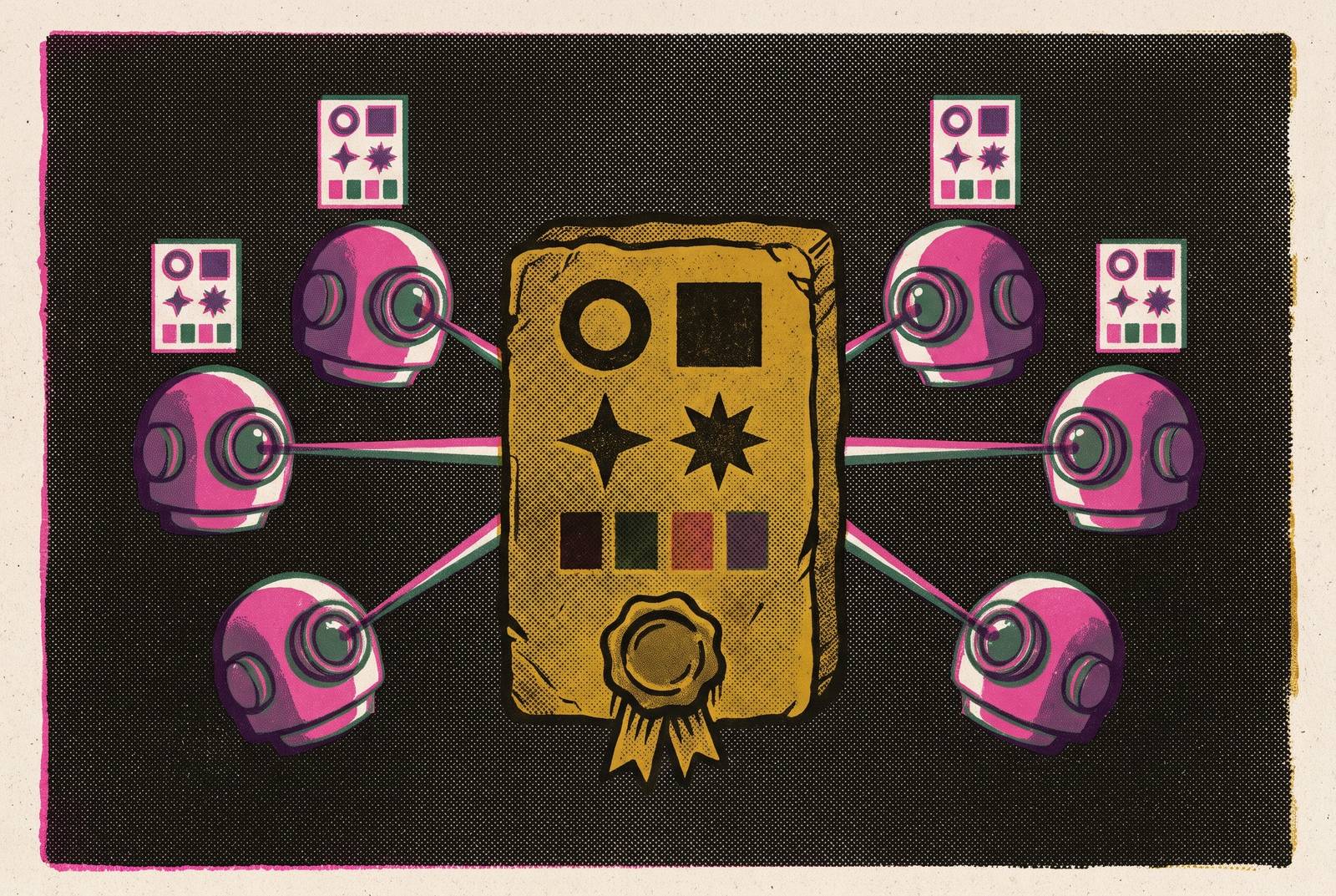
The brand layer for agents is structured, machine-readable brand context that every connected agent reads before it generates output. Brand guideline propagation therefore needs a write-once, read-many contract. That contract gives agents one authoritative source for brand identity and gives reviewers the same source for testing compliance.
How brand guidelines functioned as a human review tool — and why that breaks under AI agents
A familiar brand review meeting starts with finished work and a question about whether it expresses the organization’s identity. People look at the copy, imagery, and positioning, then judge whether the result feels like the brand. The rules arrive late in the process. The workflow runs from design to documentation to build to review, with guidelines acting as a filter on work already produced.
That sequence depends on a small, trained population of creators who absorb the rules through exposure and correction. Agents produce large amounts of work with no prior exposure to the brand and need explicit rules to follow. A reviewer can still reject an individual output, but that rejection does not establish a common identity context for every agent producing the next one.
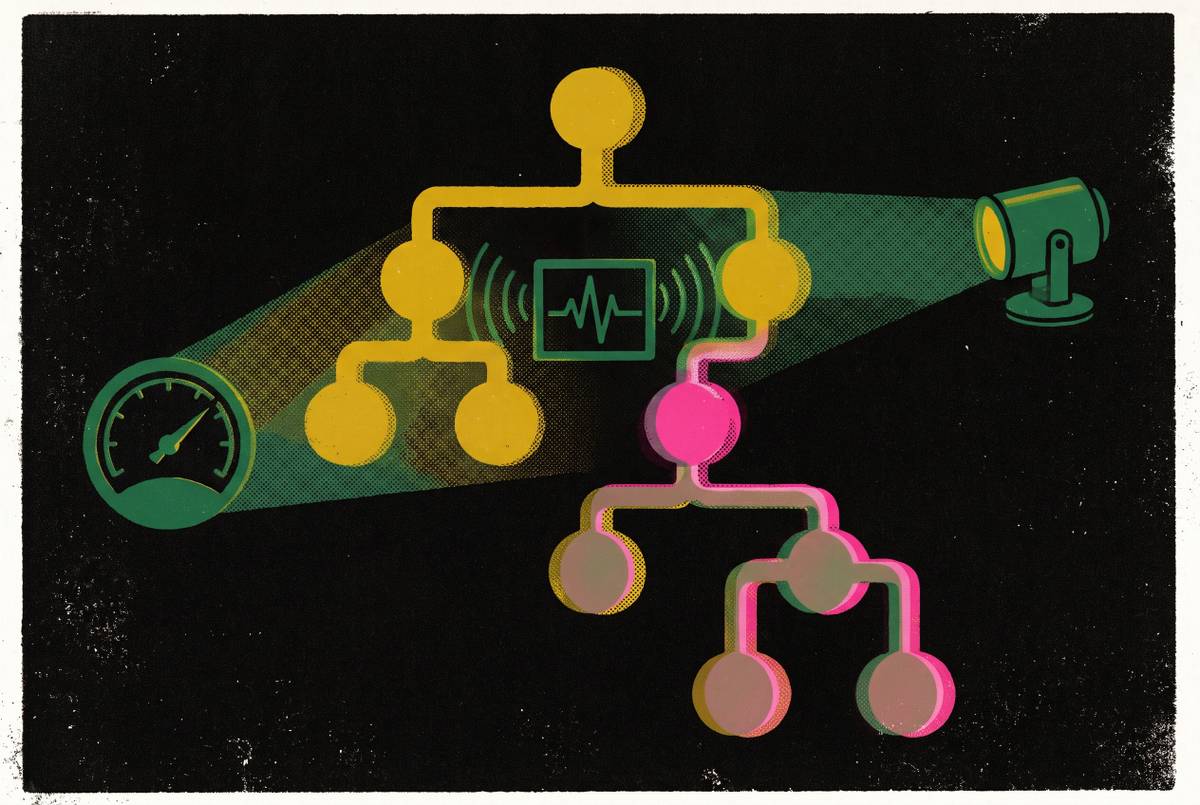
Van Esch & Cui’s 2026 paper in Business Horizons names the resulting divergence “agentic brand drift.” It describes a gradual departure from intended identity without a triggering event, even as performance metrics improve. The usual monitoring can miss this change altogether. The paper identifies Decision Diffusion, Temporal Collapse, and Accountability Dissolution as causal mechanisms, locating the problem in how agents operate.
Why AI agents require brand rules to be present at inference time, not review time
Pernod Ricard discovered that one popular AI model categorized Ballantine’s Scotch as a prestige product when it is a mass-market offering. The model filled an information gap with inference. It did not need an explicit instruction to reposition the product, because incomplete information was enough to produce an incorrect interpretation.
An agent without explicit context infers brand character from whatever it can parse. Positioning in a deck, voice rules in a PDF, and product knowledge held in someone’s head do not govern generation merely because they exist. They must enter the context available to the agent. A prompt that asks for on-brand work cannot substitute for the information needed to define what on-brand means.
The contract therefore flips from output followed by review to context followed by generation. The corresponding workflow runs from design through structured data, distribution, build, governance, and improvement.
Van Esch & Cui distinguish this requirement from conventional AI governance. Their paper argues that NIST AI RMF and ISO/IEC 42001 govern system behavior rather than meaning coherence, so successful implementation can still leave brand drift unresolved. Brand identity needs its own explicit constraints.
What makes a brand book unreadable to an agent — and what structured brand context actually requires
A brand book is built for human interpretation. White space, imagery, metaphors, and qualitative descriptions help a person understand an identity, but they do not become unambiguous constraints simply by entering a model’s context. Readable text is not necessarily an executable rule. The document architecture needs to change.
The translation changes the form of the material. Color guidelines become design tokens with explicit hex values, while typography guidance must name the fonts so an agent has more to work with than how they look. Screenshots become libraries of components, and word-processing documents become structured content models. Loose naming conventions become metadata and taxonomy, while tribal knowledge becomes explicit rules.
A statement that the tone is warm and confident leaves the agent to choose what those qualities sound like. Approved sentence structures and banned phrases narrow that choice. To govern output, a rule must translate into a prompt, template, approval step, or machine-readable constraint, even when its original wording was perfectly clear to a human reader.
The context also needs breadth. The six required file types cover voice, messaging, ICP, company, offerings, and content structure rules. Without explicit context, an agent may sample published material and inherit outdated positioning together with current messaging, with no way to rank them. A more capable model still needs a basis for deciding which statements represent the brand now.
How do multiple AI agents access the same brand guidelines without drift?
Well-structured rules still fail when agents read different versions. Brand knowledge scattered across Figma, CMS platforms, DAMs, Notion boards, Confluence, decks, and PDFs leaves authority unresolved. Each place may hold material an agent needs but leave it unclear which material takes precedence. The resulting context reflects whichever sources an agent finds and weights.
A single source of truth requires more than consolidation. It needs one authoritative location, versioned context, and a contract under which every connected agent reads that source on every call. Updates then propagate without separate instructions to each assistant. “Write once” describes a governed point at which the brand can be revised.
A brand constitution gives that source a useful governing role. Van Esch & Cui describe Origin Signals as curated records from brand decision history made accessible to agents as identity context. Those records become architecturally integrated constraints on optimization.
This is an infrastructure problem because authority must survive distribution. A shared document that some agents ignore, or a copied guide that becomes stale, does not satisfy the contract. The source must govern production context in practice. Its location, versioning, and propagation are therefore part of brand governance.
How MCP turns the brand context layer into a queryable endpoint every agent can call
MCP provides a delivery mechanism for the shared context. A brand server exposes an endpoint that connected agents can query regardless of the tool or platform through which they operate. The agent retrieves the authoritative material instead of depending on a marketer to explain the company again.
The server exposes three distinct capability categories. Resources provide read-only structured data, including brand voice guidelines, the product catalog, and pricing. Tools expose functions that an agent can invoke. Prompts provide templated instructions governing how the agent describes the brand, connecting the source material to the way it is used.
That common interface does not make delivery costless. MCP can consume more tokens than equivalent CLI operations, while network-dependent failures create a reliability concern as more tools connect. The interface and the implementation need separate evaluation. A queryable brand source solves an access problem, but does not by itself guarantee efficient or dependable access.
The MCP specification says that hosts must get explicit user consent before they invoke any tool. It also acknowledges that the protocol cannot enforce those security principles itself. Whether that protection works depends on how teams build the system. Teams building on MCP must enforce granular server permissions, treat server descriptions as untrusted input, and audit tool combinations for unintended paths to data.
What the same contract looks like for teams running multiple brands, and why the boundary between brands is a governance requirement
Teams that run multiple brands need a separate context contract for each brand. A different name and color scheme on a shared agent does not establish the necessary boundary. The underlying model and infrastructure can remain identical, while the system prompt, tone configuration, policy rules, and data scope differ. Separation belongs in the context and permissions.
The boundary must cover behavior as well as data. Customer information, conversation history, and agent behavior must not bleed from one brand into another. For a single brand, agents need to follow the same authority to stay consistent. With multiple brands, agents must also get identity or customer context only from the right authority.
A knowledge graph of brand tokens, combined with production-grade agents, can coordinate token lifecycles, visual rules, and release pipelines across brands, regions, and platforms. The shared structure can show how brands relate to one another while keeping the rules that make each one distinct.
Changes also need a governed path through that structure. When a token changes, related typography, spacing, color, and accessibility tokens are re-evaluated automatically. When rules conflict, agents suggest fixes and human operators approve them before rollout. Write-once, read-many describes how approved changes propagate.
How inference-time brand context changes the economics of AI content production
The setup burden is real and front-loaded. Each brand needs explicit context, structured rules, and a source with authority before agents can reliably work from those decisions. The economic distinction is between establishing the brand context and repeatedly reconstructing it through manual prompting and correction.
Missing documents lengthen the necessary setup. An agent can assemble an initial guide from a website and existing assets, but the team must review, correct, and lock that guide before treating it as authoritative. Extraction is not approval of the extracted claims. Without that human decision, the starting guide can reproduce the same ambiguity that caused the agent to infer the brand incorrectly.
Stable context also creates an opportunity for prompt caching. Providers that support caching can lower input token costs for stable prefixes that hold the system prompt, tool definitions, and brand context. Structure makes that reuse more practical. An ad-hoc paste of guidelines into each prompt does not provide the same stable basis, while delivery overhead remains part of the operating cost.
The durable advantage is therefore the quality of the context. As agent capabilities become increasingly commoditized across platforms, a stronger brand layer improves the conditions under which each generation occurs. The setup investment is reused across outputs. Maintenance remains necessary and follows changes to the brand independently of content volume.
What reviewing AI-generated output against the brand actually requires once context is loaded at inference time
The reviewer no longer has to start by asking whether the agent guessed the brand correctly. The reviewer checks whether the output conforms to explicit constraints the agent received. That distinction turns review from an attempt to reconstruct intent into a check against a known standard.
Automated validation can test rule-based constraints at creation time. Human review then concentrates on decisions with identity stakes, where compliance with a narrow rule may not resolve the brand judgment. This division depends on explicit, checkable requirements. Vague guidance cannot support dependable automatic validation merely because it has been stored in a central location.
Van Esch & Cui supply CORE and GUARD as organizational complements to technical governance. CORE identifies decisions with identity stakes, while GUARD monitors output patterns for identity coherence over time. Individual compliance is not the only concern. Pattern-level review addresses the gradual divergence that can remain hidden when operational performance improves.
The evidence must point back to the same source of rules. A traceable result for each rule is different from a reviewer’s impression based on a remembered style guide. When the brand changes, the approved update must reach both the generation context and the criteria used to review work from then on. Otherwise, agents and reviewers are enforcing different versions of the identity. The final link in the contract is shared authority over what gets produced and what gets approved.