Brand Knowledge as a Resolved Runtime Binding Not an Agent Configuration Value
Agents that fetch live brand rules avoid the stale-snapshot problem.

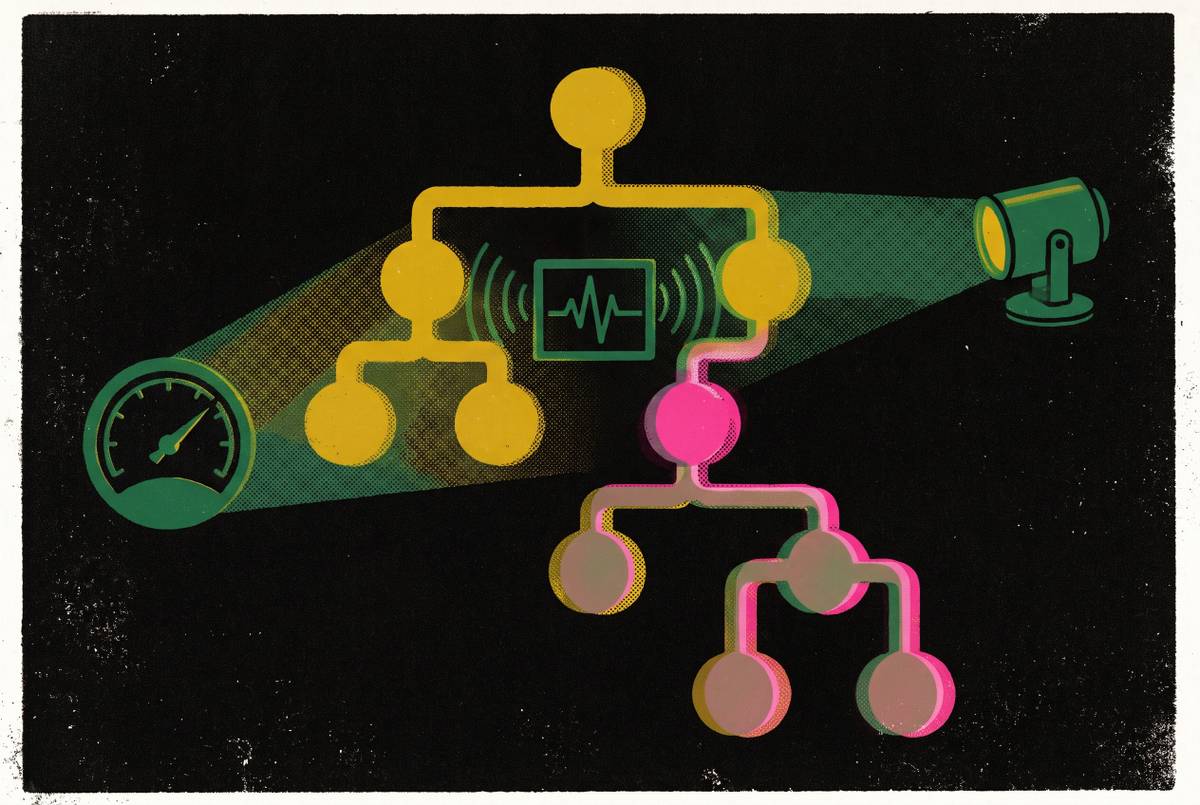
Giving your own agents accurate brand context requires brand knowledge to be a resolved runtime binding. For every generation request, the agent must fetch the current, authoritative brand state from a shared, governed, versioned source.
How brand knowledge gets embedded as agent configuration today
The prevailing approach embeds brand knowledge in a system prompt, a pasted PDF, a baked-in Gem or a Custom GPT. This solves a real usability problem for teams. A person can ask for work without learning how to prompt for the brand or supplying the same background in every session.
Mechanically, however, those instructions resolve brand knowledge only once. At setup, someone selects the material the agent will use and places it inside that agent’s instruction set. The agent holds the resulting value, while other agents in the workflow either start without brand knowledge or get copies that someone must keep up to date separately, even when they work for the same organization.
The configured agent can reuse its instructions across tasks without consulting the source from which those instructions came. Reuse saves the team from repeated briefing, but it does not establish a connection between later brand changes and future generation. The knowledge remains available, but its binding is static.
What configuration-time embedding actually does to brand knowledge
Embedding converts a living resource into a fixed snapshot. The conversion occurs before any output is wrong and before any guideline changes. Brand knowledge that could be consulted at its source becomes a value held inside an agent. Its validity now depends on whether the source has changed since that value was copied.
A refreshed color palette, an updated voice rule or a revised compliance constraint exposes that dependency. The authoritative guidelines change, while the configuration stays as it was. Nothing in the copied value tells the agent that its instructions have expired. It continues generating against the snapshot as though the snapshot still describes the brand.
There is also a separate problem of representation. An 80-page PDF or a prose tone-of-voice document is written for people who can interpret examples, reconcile ambiguity and apply professional judgment. Adjectives such as “bold, human, trustworthy” leave much of the intended behavior unstated. An AI-operable rule instead expresses behavioral constraints that a model can follow without asking a follow-up.
These problems are related, but they are not interchangeable. Updating a pasted document makes it current but leaves its rules unstructured. Turning old instructions into structured values changes their form but leaves them out of date. When an agent follows a pasted guide, it is pattern-matching against prose.
Why configuration fails when more than one agent touches the brand
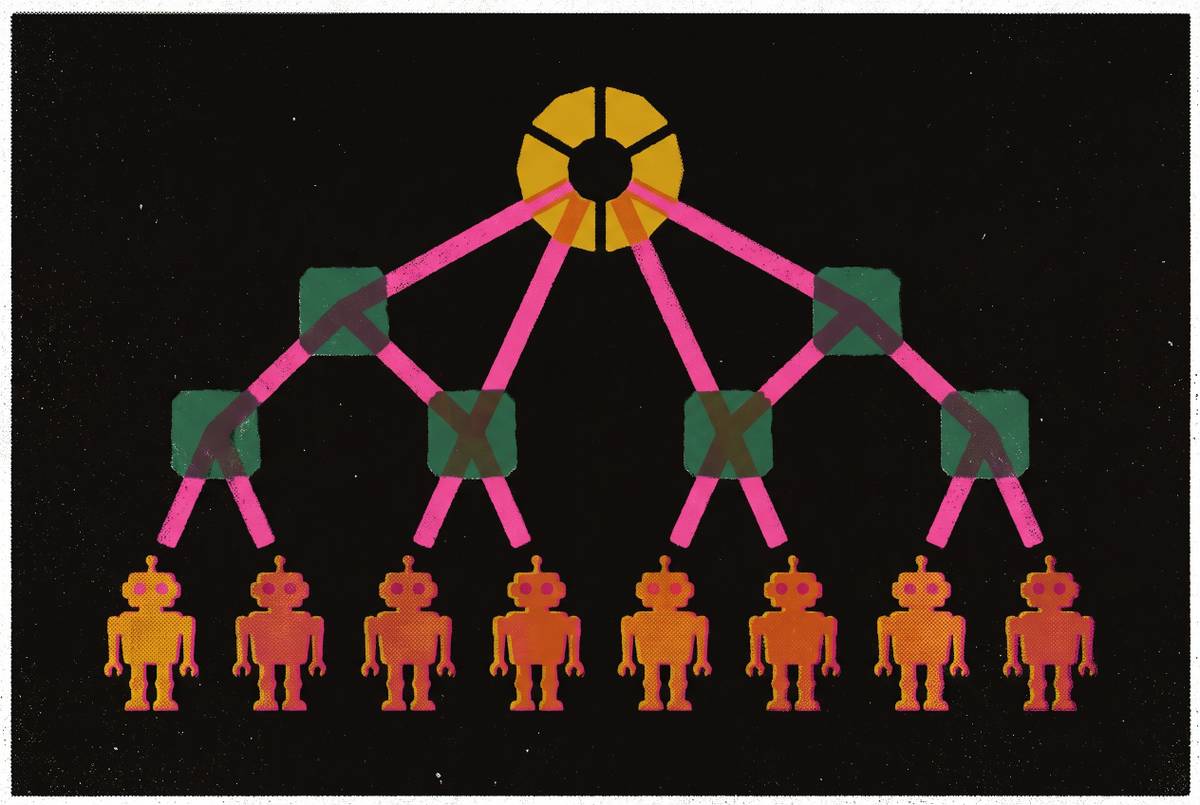
In a five-agent pipeline, each agent has its own configuration. Brief generation, copy drafting, visual generation, compliance review and publishing each need brand knowledge, but separately configured agents hold separate versions of it. Updating the copy agent does not update the visual agent. Configuration provides no synchronization mechanism between them, so agreement depends on maintaining every copy independently.
The architectural distinction is between local memory and shared context. Agent memory holds conversation history or task state for one agent, while agent context shares knowledge about the organization across the system. Brand identity in local instructions stays with that agent. When the visual agent needs what the brief agent established, consulting that agent’s transient session is not equivalent to querying a governed source.
This setup allows drift even when the people who run it take care. A phrase can become more common or a visual style can shift incrementally while every individual output still appears plausible. AI can produce off-brand work faster than review can catch it, and gradual changes are difficult for people to notice. More careful maintenance does not add the missing shared binding.
Agency work multiplies the same problem across brands. A rugged outdoor apparel brand and a high-end fintech startup may use the same foundational model, but each needs its own context. Separate configuration copies age independently, increasing the number of places where brand understanding can diverge.
How can every agent get current brand context through runtime binding?
A runtime binding resolves brand knowledge at generation time. Instead of reading a brand value fixed at setup, the agent queries a shared source for the current state relevant to its request. This is late binding, in contrast to configuration’s early binding.
Late binding replaces one-time resolution with resolution per request. That trade fits knowledge whose values change, because the agent consults the source when it needs to act. A shared context layer gives every agent access to that same source, whether the task is drafting copy, generating an image or reviewing finished work. Tasks can draw on the shared source and still receive different instructions.
Governance determines who controls those instructions and their authority. Human domain experts maintain the source, rather than leaving each agent’s understanding to its individual configurator. A change becomes available to every connected agent through that common source. Each agent resolves it on its next request without anyone having to edit its configuration.
The brand is a versioned artifact, and agents know which version they are using. A new version therefore becomes a deliberate, traceable rollout. Within that version, a task-specific brief resolves only the relevant logo, type, colors, imagery and voice rules.
What brand knowledge must look like to be resolvable at runtime
Runtime resolution requires rules that machines can query. A PDF, a prose document or a Figma gallery may communicate the brand to a designer, but those formats depend on interpretation. Moving them behind a live connection does not remove that dependency. The source must express the knowledge in a form an agent can use for a particular task.
A Voice Profile supplies tone, vocabulary, sentence structure and exclusions as behavioral constraints. Rather than relying on an adjective to imply a writing style, it states the behavior the agent should follow or avoid. Design tokens provide the corresponding structure for visual decisions. A color becomes a validated semantic value with a usage rule attached, while typography hierarchies and spacing become explicit values.
Interaction rules extend that structure beyond appearance and language. They state what the brand will and will not do in a form the agent can check against. Annotated examples of on-brand work complement those constraints by demonstrating behavior in context. The examples teach application, while the rules define the boundaries within which that application belongs.
Design systems provide a useful parallel for this transformation. JSON tokens, component schemas and a machine-parseable specification let AI coding agents read standards without being re-briefed each session. Brand knowledge requires the same separation of authority from individual prompts. With token-based styling, an updated token can govern future assets automatically because generation reads the structured source.
MCP as the protocol that makes runtime brand binding operational
MCP supplies a standard contract for querying external knowledge. For a compatible agent connected to a structured brand source, that contract turns request-time resolution into an implementable pattern. The agent can reference the current style guide and retrieve approved assets when it needs them.
Anthropic open-sourced MCP in November 2024, with early publicly named adopters including Block, Apollo, Zed, Replit, Codeium and Sourcegraph. The protocol plays a role comparable to REST for web services by standardizing the connection between assistants and the systems they use. For brand work, the significant change is that agents can query a common authority through a shared contract.
Compatible options include Claude, ChatGPT, Cursor and Visual Studio Code with GitHub Copilot, as well as agent frameworks. Infrastructure MCP servers cover tools including Notion and Google Drive. Higgsfield offers image and video generation through MCP. These options establish the delivery ecosystem, but the connection still depends on a structured brand source being available.
Bloomberg used MCP to address what its engineering team calls the “productionization gap” between a working GenAI demonstration and a deployable, compliant application. Bloomberg reduced experimentation cycles from days to minutes. That example concerns operationalizing connected AI rather than brand governance specifically, but it illustrates why the protocol belongs in the architecture. A working assistant and a repeatable system for resolving authoritative context are different accomplishments.
How runtime binding changes what automated brand review can do
A shared source changes the basis of review. With configuration-time embedding, an agent may generate work from an old snapshot while a human reviewer uses guidelines they remember or an outdated PDF. Neither necessarily evaluates the work against the same authority. Runtime binding gives generation and review access to current, structured rules, so a finding can identify a specific discrepancy.
Google’s Gemini team built an automated multimodal review pipeline that analyzes generated output against brand guidelines. Its checks include hex color codes and logo clear space requirements, as well as subjective elements such as whether the tone matches the brand voice. The pipeline can then refine the generation prompt using its findings. Exact values guide the next attempt, so a designer does not have to work out what to change from vague feedback.
Automated checks handle brand compliance, peer review addresses creative quality, and senior review covers flagship work. Each tier takes up a different kind of judgment while referring to the same source. Human review remains necessary for creative decisions, but it need not spend its attention rediscovering a specified color value.
The architectural gain is a common basis for evaluation. It makes the applicable guidance explicit. Consistency comes from generation and review resolving their authority through the same system. “The green shade is #1A5238 instead of the required #184F35” is evidence of a checked value against a rule.
What consistency as a system property means for teams operating at scale
The maintenance unit changes from each agent to the source. Under configuration-time embedding, a brand change requires every owner to update every affected agent, without a shared mechanism establishing that the update reached them all. Under runtime binding, the change is a versioned update to shared context. Connected agents get the new version on their next request without their owners having to edit local brand instructions.
Marketers and founders no longer have to add the same context in each session, tool and agent. Their work shifts to keeping authoritative brand knowledge up to date at the source. MCP connects agents to that knowledge, but a connection alone cannot supply the structure or governance. Without those, a request-time query delivers a file.
For multi-brand agencies, the same infrastructure can serve separate versioned contexts. The outdoor apparel client and the fintech client retain distinct rules even when their agents use the same foundational model. Their separation no longer depends on a practitioner remembering to reprompt correctly. Across copy, image and video work, the brief, the generation process and the review can all draw from the appropriate brand state.
The architectural guarantee therefore leaves room for imperfect generation. Configuration resolves once and ages, while runtime binding resolves at each request and stays current.