Runtime Brand Drift Detection Across Distributed Agent Touchpoints
Formal contracts embed brand rules into agent execution, catching drift before it reaches outputs.
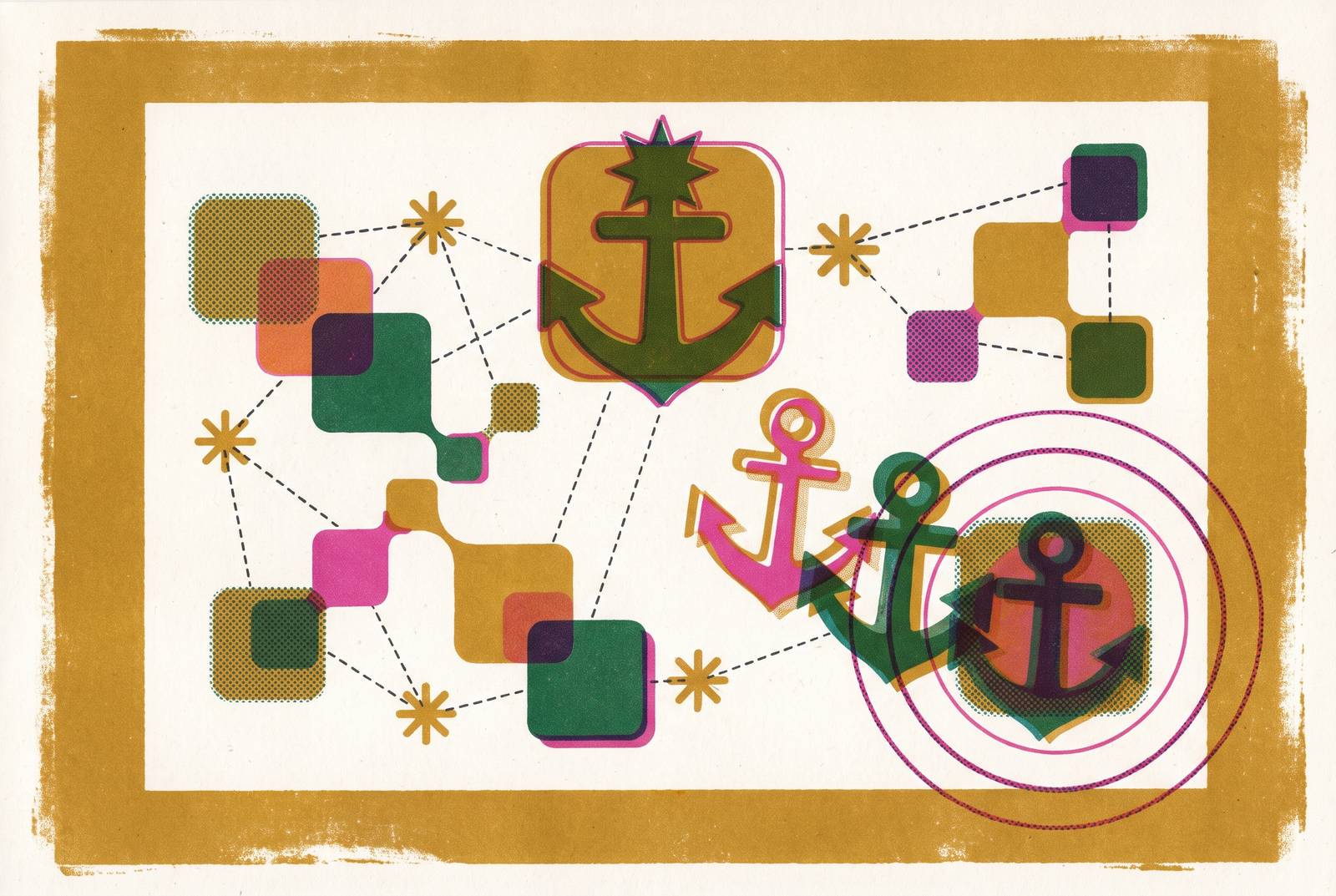
The brand layer for agents is a shared, versioned, machine-readable brand context paired with runtime checks across every agent’s output and handoffs. Runtime brand drift detection keeps agents on brand without constant manual prompting, because brand consistency must hold as agents work as well as when they are set up. Multiple agents need both the same brand definition and enforcement against it while work is underway.
Why brand drift across distributed agent touchpoints is invisible to standard monitoring
A campaign agent produces assets that look acceptable individually, but over weeks its copy becomes more casual, its color references shift, and its voice rules weaken. Every request succeeds. Nothing in the execution dashboard distinguishes those assets from the ones produced at deployment. The system records completed work while the brand changes beneath it.
Conventional monitoring tracks how work runs, while drift is visible in the choices agents make. Agents interpret instructions, reuse memory, revise plans, and invoke tools across changing contexts. Zenity identifies that gap in its runtime AI analytics framework, which examines behavior across workflows. A model update can also alter behavior beneath an unchanged endpoint.
The six forms brand drift takes across a multi-agent creative pipeline
The research paper Agent Drift: Quantifying Behavioral Degradation in Multi-Agent LLM Systems Over Extended Interactions identifies semantic, coordination, and behavioral drift. Work in production also brings goal, context, and prompt drift. These forms require different signals. Semantic drift is the progressive movement away from original task intent, measurable through cosine similarity between deployment-time outputs and later outputs of the same kind. For a brand team, copy gradually departing from the intended voice is a recognizable example.
Coordination drift occurs when agents’ outputs fit together less well, even though each output is still acceptable on its own. A copywriting agent and an image agent can each satisfy a local brief while producing an inconsistent campaign. Behavioral drift occurs when agents act in new, unintended ways, such as using a visual reference they did not use at the start. Image-to-video generation makes this failure especially visible. Products can warp or mutate between frames, with finished-asset review catching the problem only after generation.
Goal drift differs because the agent continues completing tasks while optimizing toward a target other than the stated objective. Context drift affects the information an agent has as it works, including brand instructions lost through saturation or compression at handoffs. Prompt drift starts upstream when an instruction template changes without being treated as a behavioral change. No single check covers all six forms. Checks on output quality miss failures in coordination, while tool-call monitoring alone does not show changes to prompts.
Why prompt engineering and static brand review can't hold the line at runtime
Prompt engineering establishes instructions at configuration time, but those instructions do not enforce themselves during execution. The Agent Behavioral Contracts framework identifies the absence of formal behavioral specifications as a root cause of agent drift and governance failures. More precise wording does not create formal semantics, runtime guarantees, or a recovery mechanism.
Other controls operate at different points in the lifecycle. Constitutional AI works at training time, while RLHF shapes general tendencies rather than enforcing deployment-specific brand rules on every action. Output guardrails filter responses, but they do not specify preconditions, monitor rules over time, or establish pipeline-wide guarantees. Static review also looks only at finished assets, leaving the path that led to them unseen. An asset can pass today even though the behavior producing it is already moving away from the brief.
Fixed prompts face another risk when the model behind an API endpoint changes without notice. Last month’s calibration may no longer produce comparable outputs. Decentralized creation compounds the problem as sales, support, and product teams each interpret the brand through their own prompts. Agencies face the same pressure as they work with the identities of several clients. A brief sent out once cannot keep voice rules, visual tokens, and compliance constraints up to date in every session that follows.
What runtime brand drift detection actually has to observe
Runtime detection needs visibility into the execution path behind an output, including memory state, tool invocation sequences, context reuse, and decision traces. The Agent Stability Index, introduced in the January 2026 drift paper, provides an organizing framework across 12 dimensions. These include how consistent responses are, patterns in tool usage, how stable reasoning pathways are, and how well agents agree with each other. The signals extend beyond finished content. Together, they make it possible to examine both an agent’s behavior and its relationship with other agents.
The relevant questions include which brand context loaded, whether the agent used the required color and type tokens, and whether tone instructions reached the copywriting step. Handoff traces establish whether the image agent received the brief that left the orchestrator. Context saturation also deserves observation as sessions extend. A 20-step workflow can accumulate degradation that a single-output review cannot expose.
Embedding-based detection can compare semantic movement that conventional KL divergence or Population Stability Index tests do not capture. Exact token checks can show whether the required references are still there even when the overall meaning seems much the same. Composite stability metrics, semantic comparisons, and explicit rule checks thus show different parts of the picture, with thresholds for action tied to the brand constraints being enforced.
Why behavioral baselines alone can't do the job in ephemeral agent environments
Behavioral baselines assume stable identities, topology, workloads, and patterns. ARMO describes pods recycling before baselines converge, prompts changing behavior, and deployment pipelines introducing new models. A canary deployment can put two different versions of normal operation in the same namespace. As a result, detection may return to learning mode precisely when changes introduce the greatest exposure.
Even a settled baseline can miss intent drift because individual actions may look normal while their sequence violates the brand objective. Small deviations can remain below an output-level anomaly threshold. A tone becoming more casual session by session illustrates why the distribution over time is important. Yet ephemeral deployments make that history difficult to stabilize. Baselines remain useful evidence, but they need an external reference so that detection measures departure from the brand.
Formal behavioral contracts as a runtime enforcement layer for brand invariants
The ABC framework, published in February 2026, defines a contract as C=(P,I,G,R). Preconditions specify what must be true before the agent acts, such as the availability of required brand context. Invariants are the brand rules that must hold on every output, always. Governance policies set the limits on what an agent is allowed to do. Recovery mechanisms specify what the agent does when it detects that it has drifted.
The framework makes recovery part of the guarantee. Its Drift Bounds Theorem states that contracts with recovery rate γ greater than natural drift rate α bound behavioral drift to D*=α/γ in expectation. That result depends on the stated conditions. It makes the strength of recovery a choice in how the system is built as well as a setting for alerts, though a contract on its own does not guarantee that agents stay on brand. The constraint definition and enforcement behavior still determine what the system protects.
The framework’s evaluation across 1,980 sessions found contracted agents detecting multiple soft violations per session that uncontracted baselines missed. Tone deviation, forbidden vocabulary, and off-palette references are all examples of this kind of violation. Hard constraint compliance was very high, and drift remained tightly bounded across extended sessions. Enforcement ran at under 10ms per action. The paper also establishes sufficient conditions for safe contract composition, allowing guarantees to extend across agent chains when those conditions hold.
How can multiple AI agents access the same brand identity and guidelines?
A single, versioned, machine-readable brand context gives connected agents a common reference at execution time. It must describe more than visual identity. The structured source includes logos, colors, type, style references, tone, voice, lexicon, channel and audience variations, and governance constraints. Human-readable guidelines alone do not provide that interface. Without machine-readable delivery, each agent session begins with another interpretation of the brand.
Anthropic introduced Model Context Protocol in November 2024 as a mechanism for connecting agents to shared context. For brand infrastructure, MCP lets a team publish one source that connected sessions read. Later sessions can then get updates through that source. Delivery is not enforcement, however. An agent’s access to the current context must still be checked, as must its use of that context during generation.
Versioning makes the reference auditable and separates deliberate brand changes from unintended behavioral changes. A refresh establishes a new known standard, while a model update can be evaluated against the existing one. Access controls also matter when agency partners and external tools use the source. The July 28, 2026 MCP specification revision made authorization stronger through issuer validation and by binding client credentials to the authorization server that issued them. Those controls help enforce rules on who can access the context, while brand contracts set rules for what agents produce from it.
Building detection into a live multi-agent creative pipeline in practice
Teams can implement this architecture through five detection layers, each with a defined response. Layer 1 is the context loading check. At session start, it checks for stale or cached copies by verifying that the agent loads the current versioned brand source. This establishes the reference before generation begins. A mismatch can expose the source of deviation before an asset exists.
Layer 2 is the handoff integrity check. It verifies that the downstream brief retains required color references, type specifications, and voice rules. Compression must not silently remove brand constraints. Checking both sides of a handoff addresses coordination drift where an orchestrator’s complete brief becomes a downstream agent’s incomplete instructions.
Layer 3 is semantic drift monitoring. Embedding-based comparisons track the distribution of outputs against the deployment-time baseline to expose movement in meaning or voice. The historical comparison provides evidence of a trajectory. It complements the versioned brand standard rather than replacing it, especially where no individual output has yet crossed a hard boundary.
Layer 4 is behavioral contract enforcement. Formal invariants express forbidden vocabulary, required color token references, and tone boundaries, with recovery triggered when a violation is detected. Detection needs a defined operational response here. Logging the deviation without remediation records drift but does not constrain its continuation.
Layer 5 is the pre-ship brand review. A structured check compares the asset with current brand context and records evidence for logo, type, colors, imagery, and voice. The audit trail makes review reproducible over time. It also preserves the value of final review without asking that review to substitute for visibility into the preceding pipeline.
Agent observability platforms, including Arize AI, LangSmith, and Langfuse, provide telemetry infrastructure for the earlier layers. Their generic behavioral and semantic signals still need brand-specific constraints from the shared context. The architecture becomes brand-specific when each detection point uses the relevant identity, voice, and visual rules, with an explicit recovery response attached to violations.
What teams building this infrastructure should prioritize first
Teams should first make brand context machine-readable and versioned, before spending more on monitoring tools. Detection needs a stable ground truth first. Without it, an alert may establish that behavior changed but not whether that change violated the brand. For agencies and multi-brand operators, the context definition is specific to each client. The infrastructure for delivery and detection can be shared, provided each session receives the correct brand’s context.
The second priority is a canary check using fixed brand-sensitive prompts against a new model version before production promotion. This addresses the exposure created by model changes beneath otherwise stable instructions. Handoff integrity is the third priority. For orchestrated creative workflows with more than two agents, checking that brand context survives transit is a particularly high-leverage instrumentation point. Formal contracts and ASI-class composite metrics are the higher-rigor destination for high-volume, compliance-sensitive pipelines once those foundations exist.
The immediate diagnostic is simple enough to apply now. Can every agent in the production pipeline identify, at execution time, which version of the brand context it is using? If not, the monitoring layer has no stable reference to tell brand drift apart from ordinary changes in behavior. It is measuring the agent against itself.