Brand Context as a Shared Read Endpoint in Multi-Agent Dependency Graphs
Shared brand endpoints keep multi-agent systems visually and tonally consistent.
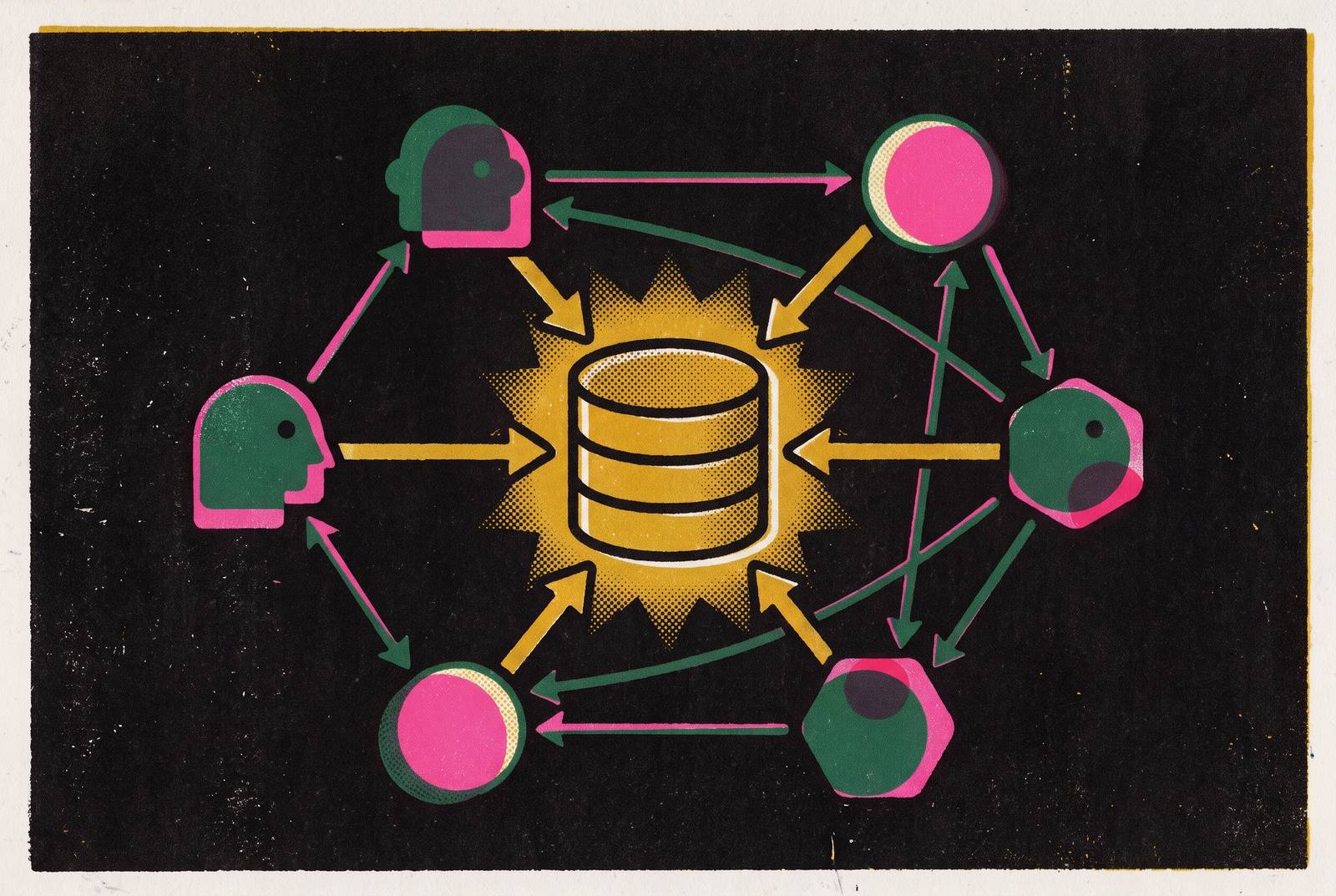
The brand layer for agents is a shared, queryable source of brand identity and rules. In a multi-agent dependency graph, every agent that generates or reviews work should resolve against that source. With brand context at a shared read endpoint, the architecture keeps work consistent without people having to prompt each agent by hand each time.
Why brand output breaks in multi-agent systems, and why prompts alone cannot fix it
A marketer or engineering lead sees two agents produce work for the same campaign, yet the visuals and copy appear to belong to different brands. One chooses typography at random, while the other writes copy in the wrong tone. Both may have completed their assigned tasks. The failure lies in shared state. Agents have no native concept of the brand and, without a common reference, no reliable way to reconcile their choices.
Each agent instead works from the fragments available in its prompt, whether a Slack thread, a static PDF, or a previous agent’s output. Those fragments compound inconsistency as work moves downstream. For a consumer brand shipping 1,200 ad creatives per month across Meta, Google, TikTok, LinkedIn, and its own site, the result becomes structural. Longer system prompts cannot repair that missing dependency because their brand context is not preserved through every handoff. Voice and visual identity need to be technical objectives that agents resolve against, so agents no longer have to infer style choices from prose.
What a dependency graph is and where brand context has to live in one
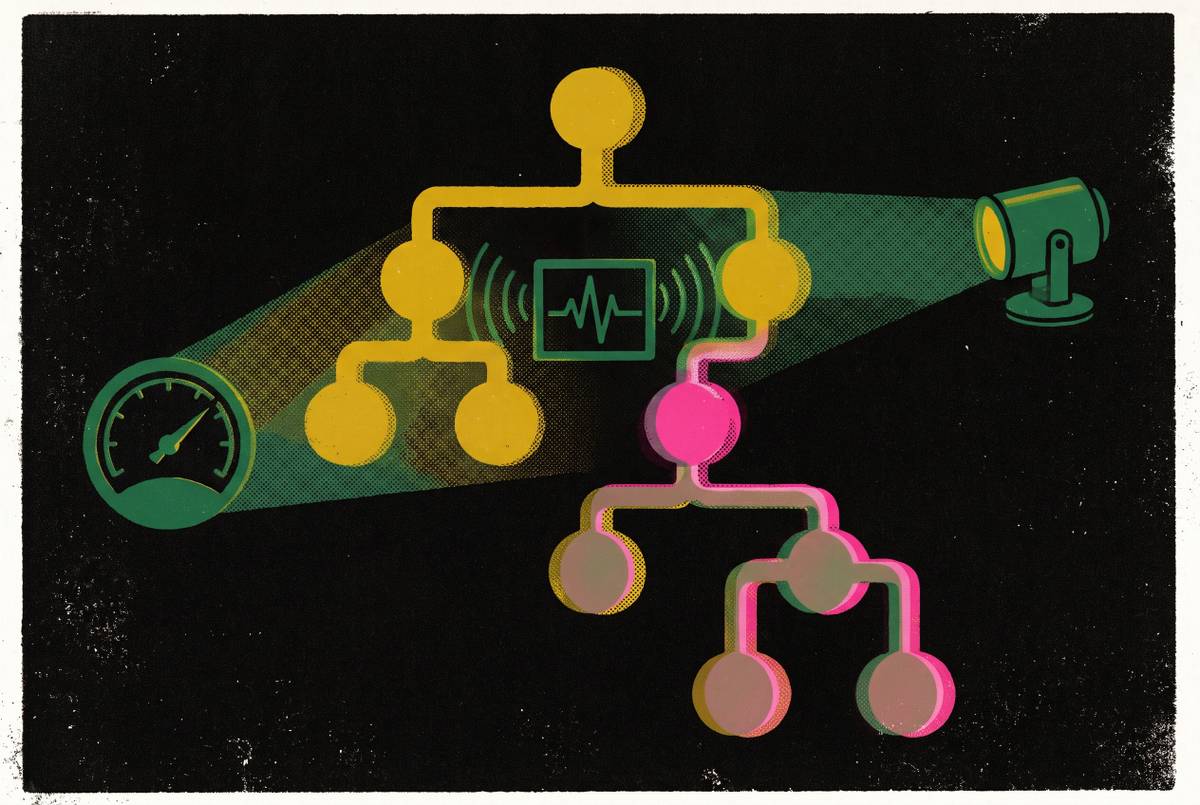
A multi-agent dependency graph is a coordinated network of specialized agents that communicate, share context, and hand off work in sequence or in parallel. Each agent retains its specialty, but correct output depends on the information available to it. The distinction resembles isolated freelancers becoming a synchronized team. Their individual skills need not change for their work to become more coherent. What changes is the common knowledge behind their decisions.
An agent at the start of the workflow may receive the right guidelines, but that does not give every downstream agent access to them. Each node that needs brand knowledge must be able to resolve it directly. The shared read endpoint fills this role by returning consistent brand state to any agent that queries it. It is a common dependency, and its connection should not require custom plumbing for each agent.
How MCP gives a brand context server a standard connection to every agent in the graph
The Model Context Protocol (MCP) provides an open standard for secure, two-way connections between data sources and AI-powered tools. Applied to brand context, it replaces separate agent-to-system integrations with a reusable connection. A server can expose colors, typography tokens, voice guidelines, approved assets, and tone rules to every compatible agent in the graph.
MCP distinguishes three primitives, which are tools, resources, and prompts. Tools are functions an agent can invoke, such as retrieving a palette for a campaign type. Resources are readable data, including logo files, approved imagery, and guidelines. Prompts provide predefined task templates, such as a brand-scoped product launch email brief. These primitives separate access to brand knowledge from instructions for a particular job.
MCP’s July 28, 2026 revision is stateless, and the protocol is an Agentic AI Foundation (AAIF) project under the Linux Foundation under Apache 2.0. OpenAI, Google, Microsoft, Block, AWS, Cloudflare, and Bloomberg support it, reducing dependence on a single vendor’s connection model. Block’s internal deployment illustrates the architectural pattern. Dozens of its own MCP servers serve thousands of employees through reusable standard connectors. A brand context server fits that pattern, although the deployment is not itself evidence of improved brand performance.
What brand context must look like to function as a machine-readable endpoint
A standard connection does not make unstructured content reliably queryable. The brand store behind it must expose components that agents can discover, retrieve, and verify. An AI brand kit replaces the 60-page human-reference PDF with JSON or API-accessible color and typography tokens, vector assets, queryable voice parameters, and embeddings for semantic brand knowledge. Structure removes the need for avoidable inference. When facts remain buried in descriptive prose, agents must interpret them before they can apply them, creating another point where inconsistent readings can enter the graph.
JSON-LD and Schema.org can define organizations, products, and visual identities as explicit entities. Canonical URLs and authoritative references connect a logo, a voice document, and a campaign template to the same identity. A content knowledge graph spells out how the brand, its visual system, approved assets, and campaign types relate to one another. Low-cost conventions such as an llms.txt file pointing to authoritative machine-readable content should be piloted. These choices make the store navigable.
Webflow’s MCP server demonstrates a scoped implementation through site-specific Agent Instructions covering the design system, voice and tone, CMS, and policies and requirements. Connected agents receive rules associated with the site they govern. That scope gives the instructions a defined context. The broader design requirement is an endpoint that answers selective queries, rather than a document dump delivered through a newer connection.
BrandFusion's architecture as a working proof of concept for the shared-read-endpoint model
BrandFusion, developed at the Chinese University of Hong Kong, Shenzhen and published as arXiv paper 2603.02816 in March 2026, provides a concrete proof of concept. Its text-to-video workflow separates the construction of brand knowledge from its use by specialized agents. The offline phase builds a Brand Knowledge Base by probing models’ prior brand knowledge and adapting to novel brands through fine-tuning. The store holds brand profiles, model adapters, and the experiences agents have gathered.
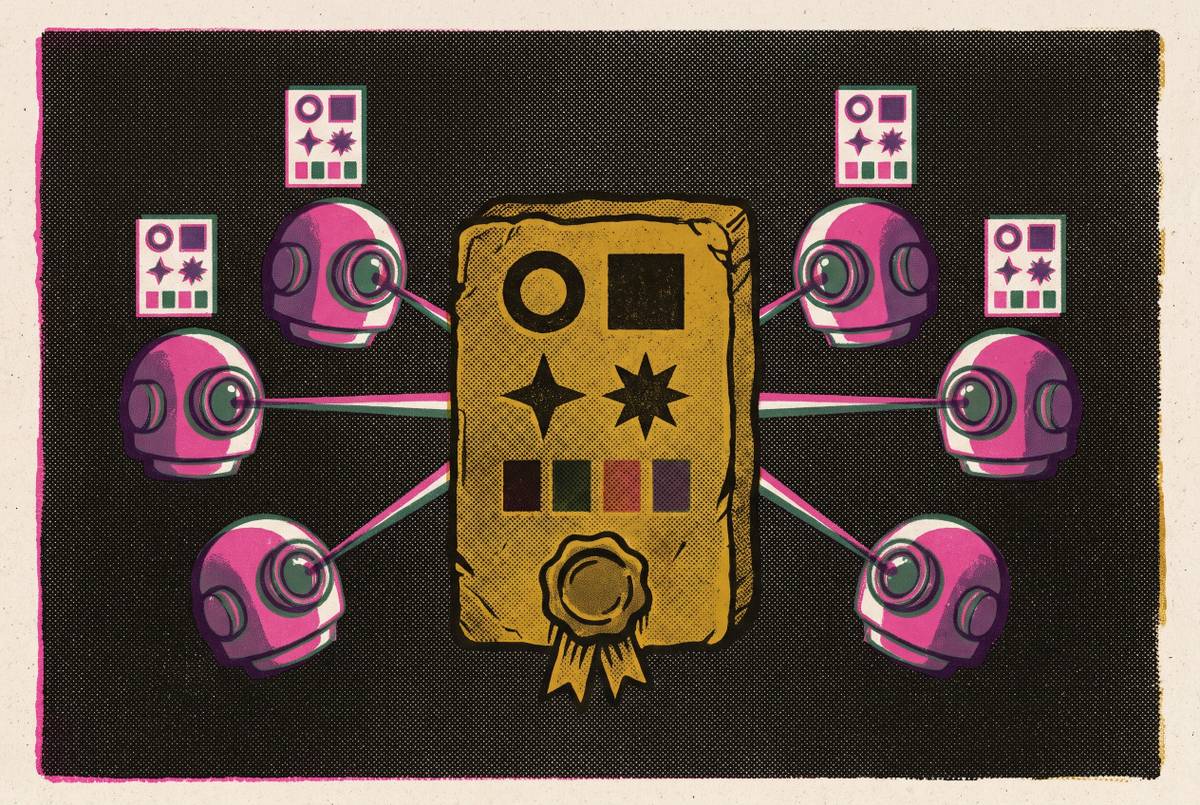
The online phase coordinates five specialized agents, namely the brand selector, strategy generator, prompt refiner, critic, and experience learner. They query the shared knowledge base and a real-time session context that tracks the current generation state. These sources have distinct roles in the workflow. The knowledge base holds the brand knowledge all agents share, while session context describes the work under way. The experiences agents gather also help the shared store improve from one session to the next.
BrandFusion reports tests of 18 established and 2 novel brands across more than one text-to-video model. It significantly outperforms baselines on semantic preservation, brand recognizability, and integration naturalness. Those results support the system as a whole, rather than isolating the endpoint as the sole cause of improvement. The transferable architectural pattern is nevertheless clear. Specialized agents coordinate around centralized brand knowledge, making the implementation evidence for the shared-read model.
The selective-retrieval design problem — why a brand endpoint loaded unconditionally breaks at scale
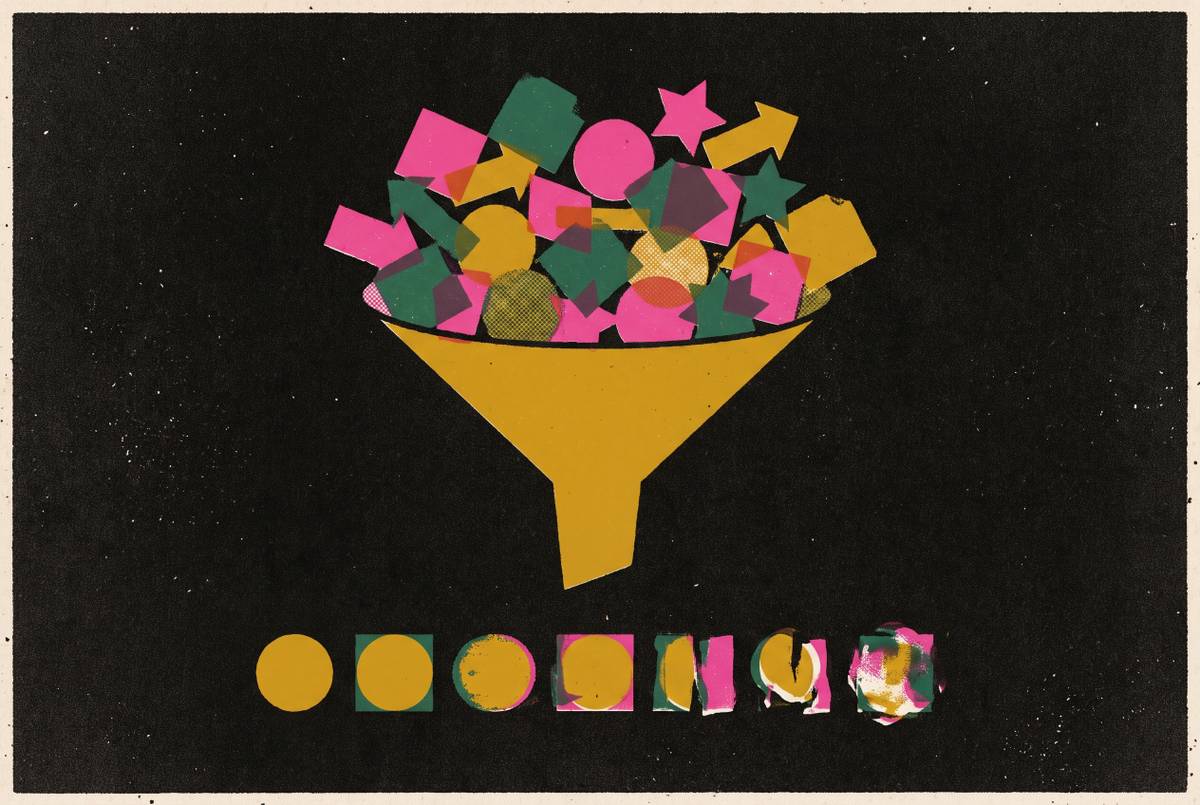
An endpoint that unconditionally supplies its entire contents to every call consumes context budget, adds cost, and introduces noise before the agent addresses its task. A headline agent needs voice rules and tone parameters but has no need for logo specifications. An image-generation agent needs visual tokens but has no use for the editorial calendar.
Discrete resources allow each agent to fetch the brand components relevant to its work. In this design, the endpoint functions as a brand search API, while the brief layer compiles the logo, type, color, imagery, and voice rules applicable to a particular job. The brief is a task-specific interface to the source. This component-based design also makes updates more precise because only affected components need to change when the brand changes.
Versioning brand context so every agent in the graph works from the same current state
Selective retrieval is reliable only if the retrieved state is current. Brand changes need versioned updates that propagate through the shared store. When a primary color or tone guideline changes, agents querying that component should resolve against the new version from that point forward. Otherwise, shared access can conceal conflicting states. Agent A may still follow an old voice rule in its system prompt while Agent B retrieves the updated rule for the same campaign.
This is not only a rebrand problem. Agencies and multi-brand teams need hard boundaries between brands as part of daily operation, with distinct tone configurations, visual rules, policy scopes, and data scopes. The underlying model and infrastructure can be identical across clients, but their brand-specific configurations cannot be informal additions to an undifferentiated shared state. Updates must propagate within the appropriate brand boundary without changing adjacent brands. Versioning gives each configuration a known state, so its rules no longer depend on which copy an operator last supplied.
The code-versioning analogy is useful because it identifies where authority belongs. A committed brand change belongs in the context store, and connected agents should retrieve it rather than wait for their operators to revise separate copies. Prompt-configured agents and endpoint-querying agents cannot be treated as equivalent if their rules can diverge. Their references need the same versioning discipline. Properly governed, the endpoint becomes the system of record for brand state, equivalent in role to a source-controlled configuration file.
Reviewing agent output against the brand endpoint before it ships
Generation alone does not close the consistency loop. The same endpoint must also supply the reference for reviewing finished work before it ships. In a generate-check-verify workflow, one agent generates, a second checks voice and messaging, and a third verifies visual compliance. Each review uses the same brand source as generation. This brings the architecture back to the original failure, where outputs from the same campaign disagree despite each agent completing its task.
The review agent checks work against the color tokens, voice parameters, and approved asset set that apply to it, with evidence for each item it verifies. That makes review a structured comparison rather than another independent interpretation of the brand. A shipped asset can then have a verifiable record of the brand checks it passed. Without that continuity, a review stage can introduce its own conflicting assumptions and fail to detect those introduced earlier.
As agents make micro-decisions in marketing, communications, and customer experience, these boundaries and feedback loops play a growing part in shaping brand strategy. The endpoint defines the reference, while review tests whether the output conforms to it. Neither function replaces the other in the workflow. Together, they turn brand governance into a repeatable part of production rather than a correction applied after inconsistent work appears.
How do multiple AI agents get access to the same brand identity and guidelines in practice?
Implementation requires four elements, which are a structured brand store, a standard connection layer, selective retrieval, and a versioning and review discipline. Implementation starts with converting prose guidelines into design tokens, canonical asset references, and discrete voice fields. Entity relationships should spell out how the brand, visual system, campaign type, and approved assets connect. Agents then have a defined route through the store. They do not need to infer those relationships from a narrative document.
The store can be exposed through an MCP server for compatible agents, including Claude, ChatGPT, Claude Code, Cursor, and Codex. Teams embedding brand context in their own products can instead use a REST API. Both surfaces should read the same underlying context. Separate stores per integration would recreate the fragmentation the architecture is intended to remove. The connection layer should widen access without multiplying sources of authority.
Retrieval should expose individual brand components as resources and tools, with task-specific briefs compiling only the rules relevant to the current job. Every brand update should then be treated as a versioned commit that connected agents pick up automatically. Finished work should pass through review against that same endpoint, with evidence logged for each check. These are the operational tests of the architecture. A connected document repository is not yet a brand layer for agents unless its knowledge is queryable, scoped, current, and used to judge the output before release.